How High Should a Footrest Be? The Guide by Height
A footrest only helps if it is at the right height. Too low and it does nothing; too high and it lifts your knees and pulls your thighs off the seat. The good news: the right height takes two minutes to measure with a simple tape measure. Here is the method, a settings table and the most common mistakes.
The basic rule: feet flat, thighs level
A comfortable sitting position at your desk comes down to a few simple points:
- your elbows are roughly level with the desk, forearms resting;
- your thighs are level and fully supported by the seat;
- your knees are at about 90°;
- your feet rest flat, not dangling or on tiptoe.
The catch is the order: you set the chair for the desk first (your elbows), and only then look at your feet. If the desk is high for your height, your feet no longer reach the floor properly. That gap is exactly what a footrest should fill.
Measure the right height in 3 steps
- Set your chair first so your forearms are level with the desk, shoulders relaxed.
- Sit back in the seat, back against the backrest, thighs level.
- Measure the gap between the floor and the soles of your feet, heels below your knees. That gap is the height you need.
Table: which setting to choose?
| Measured gap | Recommended setting |
|---|---|
| Under 4 cm | A footrest is not essential; a low or rocking model still helps keep your legs moving. |
| 5 to 7 cm | Low position (6 cm) |
| 7 to 9 cm | Middle position (8 cm) |
| 9 to 11 cm | High position (10 cm) |
| Over 11 cm | Check your desk or chair height first: the gap is too large for a footrest alone. |
Between two settings? Pick the lower one: your thighs should stay supported by the seat.
What about the angle?
A slight tilt towards you feels more natural than a perfectly flat surface, because your ankles stay relaxed. With a rocking footrest you don’t need to pick a fixed angle: your feet vary the tilt on their own, so you don’t stay still for hours.
The 4 most common mistakes
- A footrest that is too high: your knees end up above your hips and the back of your thighs leaves the seat.
- A footrest that is too far away: your legs stretch out and you slide forward on the seat.
- Setting the footrest before the chair: the footrest height depends on the chair setting, not the other way round.
- Staying still: even a well-set workstation doesn’t replace movement. Change position and stand up regularly.
Which Ms.Zerone footrest for your height?
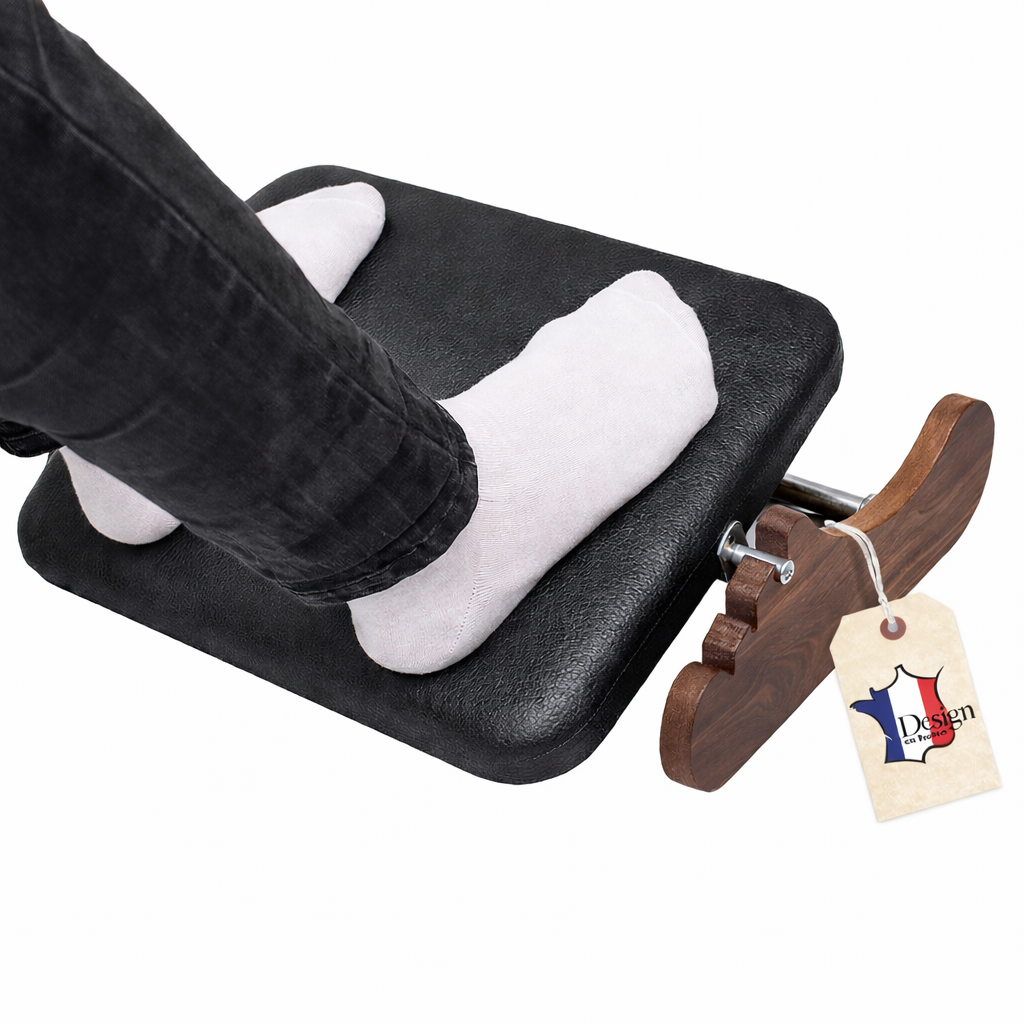
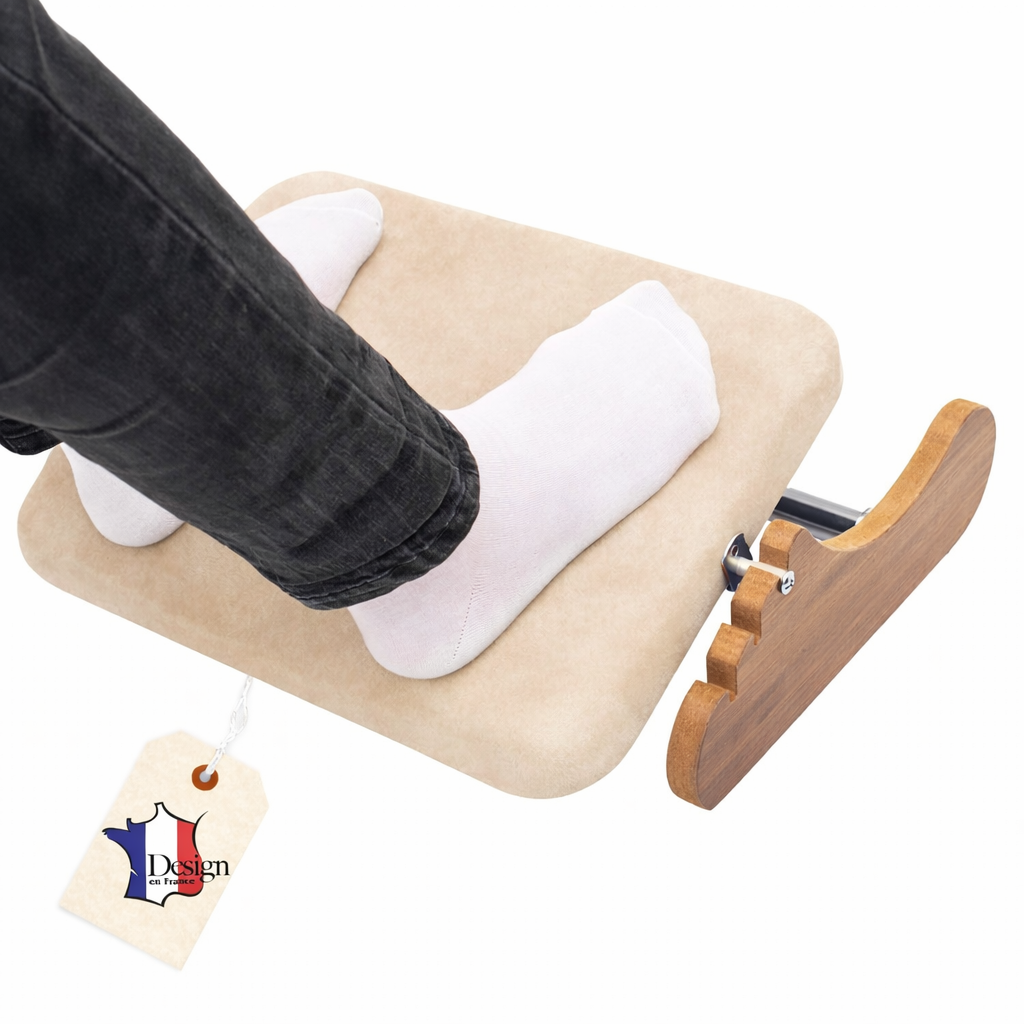
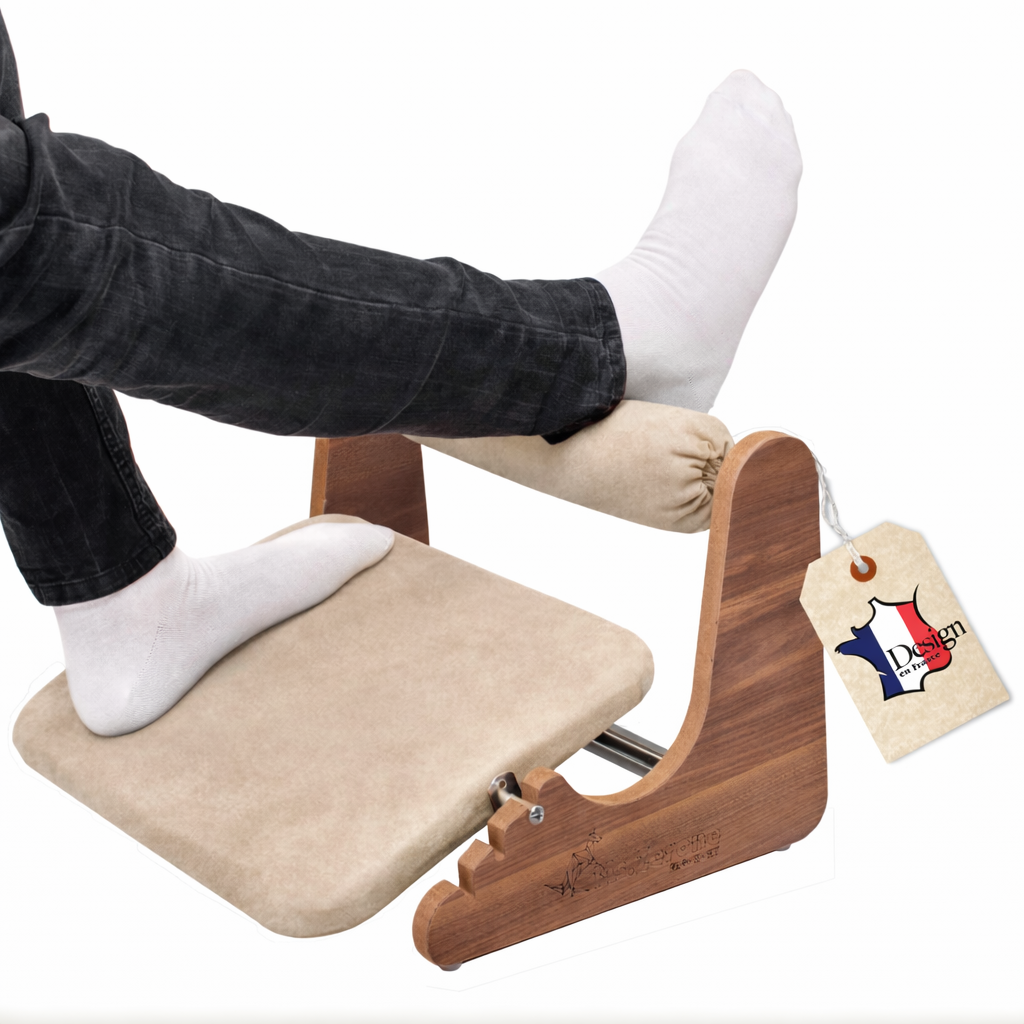
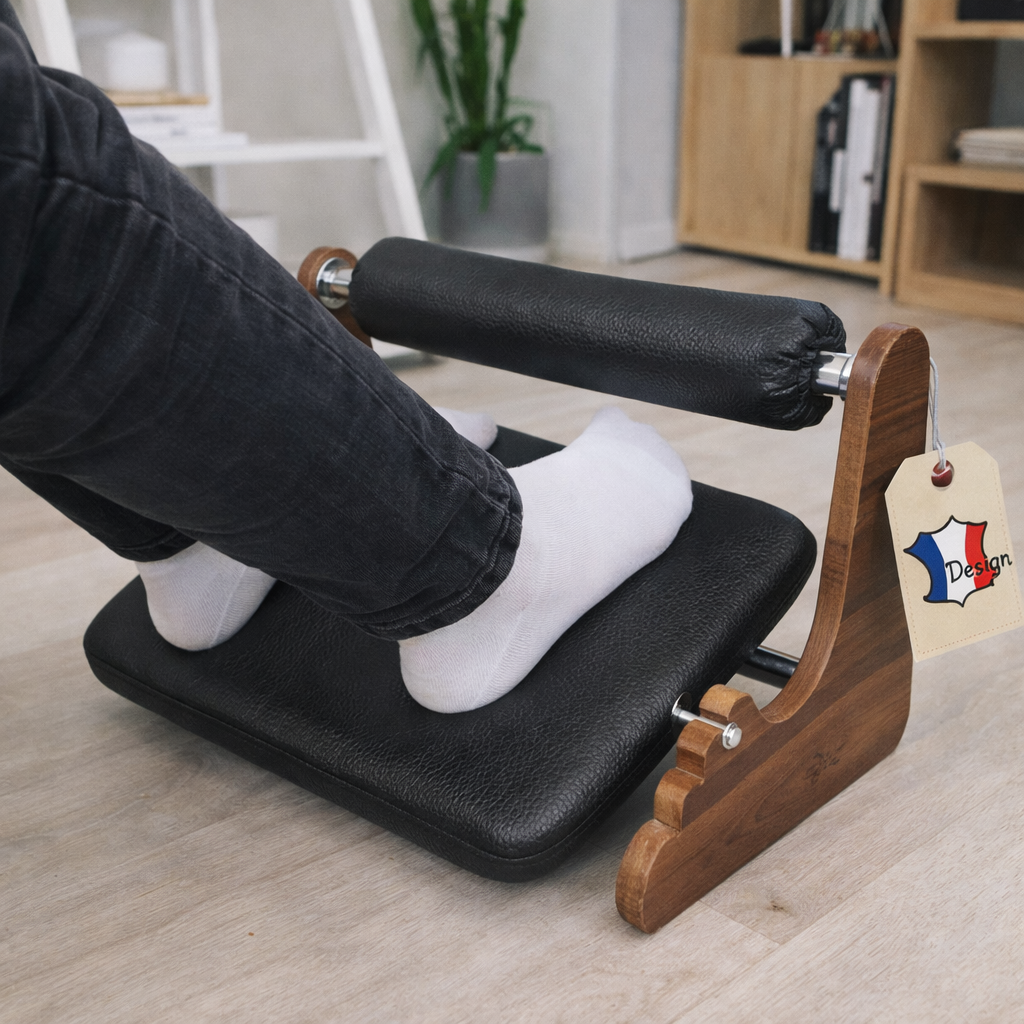
- The Confort range adjusts to 3 heights: 6, 8 and 10 cm, on a rocking base. Choose the wood-veneer Confort, the vegan leather Confort Cuir or the suede Confort Home, with or without a massaging roller (Plus versions).
- Flexirest is height-adjustable and compact, and also suits low desks.
- For a small gap, our active footrests and balance boards keep your legs moving.
Frequently asked questions
At what height do you need a footrest?
There is no cut-off: it depends on the height of your desk and chair. Do the test above: if your feet don’t rest flat once the chair is set for the desk, a footrest will help.
Is a footrest useful if my feet touch the floor?
It is not essential, but a rocking or roller model is still worthwhile to keep your legs moving during long days at a desk.
This advice is about comfort at your workstation. If you have persistent pain, ask a health professional for advice.